INDEX
ABOUT
FAQ
GLOSSARY
MBTI TYPINGS
MBTI RELATIONS
DISCORD
PHOTOS
STORIES
GENERAL
DIFFERENCES
TYPING
FUNCTIONS
TABLES
LISTS
WORKS
VARIOUS
NAMES
MORE
Types #17X ← ✸
On top of all the other problems in typology, there's a clear obstacle (and consequent global distortion) coming from the fact that many people who are interested in types are very young. Youth tends to imply two opposing things: on one hand an interest in finding something to belong to, identify or describe oneself with (preferences, styles, crowds, fandoms, classifications, labels, ideologies, movements, careers, etc), and on the other a more or less pronounced lack of self-knowledge and self-awareness. We want to know who/what/how we are, but we don't know it. We are confused, so we look for some certainty, but that very situation is quite slippery: how much are we really finding out and how much are we only assuming to be true?
First, in terms of dichotomies, young people don't tend to be confident in groups or in public, basically because they lack experience, and they often consider themselves outsiders (partly because of that, but also because others seem weird, we don't like them, we don't "fit in", etc), which leads to a [false] I>E tendency. The same happens with S/N. It's quite difficult for young people to see themselves as traditional instead of original, or even realistic vs imaginative, for example, so you get a lot of false "Ns" (in general, common definitions of "intuition" refer to many things that aren't N). And then a similar thing happens with J/P, too. From a broad perspective youth is more about exploring and trying things and being casual than going by principles and being systematic, planful and so on. All this extends to different ways of trying to distinguish the dichotomies, directly or indirectly, and taken all together it skews things towards "INP".
In terms of functions, one of the most widespread misconceptions about them is mistaking them for what's actually related to pairs of dichotomies ("Ti" = TP-traits, "Si" = SJ-traits, etc), so you get again the same problems. Other incorrect definitions might also have that kind of thing, but of course they or their supposed order are wrong so they are already mistyping everybody, regardless of age.
Young people are also quite prone to unconscious focus or confusion. Things are still mixed together, and they might think that their interests define their consciousness, or just have a hard time recognizing where they stand psychologically, because they are still trying to figure themselves out. Some can go from being very shy to always trying to get attention, in a few years. They can start something, totally convinced that it's "their thing", just to find out rather quickly that it isn't, at all. And it's complicated because not all changes might go in the same direction or be type-relevant.
The chance of mistype is not much lower when it's another person doing or helping with the typing. Just like the mind in itself can be mixed/confused, the observable behavior is prone to reflect that and give contradictory signals. The same happens with the various kinds of self-reporting, where there are also obstacles like insufficient perspective, the young person's [interpretation of] language having a rather narrow scope, and in some cases the limitation of having to work only with what they say about themselves.
The solution includes not only forgetting all the distortions and incorrect typology stuff, but also, quite obviously, waiting. It's a good idea to keep early self-types as speculative (and private), and recheck things periodically. If you take what's actually a self-mistype too seriously, you're very likely going to hurt yourself in some way, and probably others. Believing that you are a type other than your true one can lead you to mistake your weak points for your strengths, and vice versa. It can make you ignore the things that you need to be more careful and mindful about. It can make you more confused about yourself. It can prevent relationships from improving, or make them worse. If you talk about types you will be saying incorrect things, which in turn can generate more mistypes. Etc.
So please be careful. And be patient. Like I said before, your type isn't going anywhere, it's already a fact in you, already "working". And if the question is identifying it, what's important is knowing about the whole landscape, which implies being aware of how other people think, that is: stepping out of yourself and being exposed to remote and unfamiliar psychologies. You need to get the coordinates and the ranges right, understand conscious vs unconscious, check all the different angles of analysis, and have a wide enough perspective so that you can locate yourself in all that. This takes time, and can't be rushed. It's a complicated thing and there are no shortcuts. Even if we ignore their wrong foundations (which of course are sufficient to invalidate them), quick answers like those you get with tests or other "methodical" means can't really be trusted because there is no space for a steady and reliable analysis that's deep enough to get to the core and avoid filters like language and changing psychological states.
Some people are too emotionally influenced to be able to type themselves or someone else impartially, so the chances of doing it correctly decrease quite a lot. It can get to a point where no matter how much incompatible information is there suggesting a different type, they can't acknowledge it. Many of them would probably deny it, but they can't make a neutral analysis because their emotions keep having an effect on their conclusions. With that, it's extremely easy to misdirect the typing, in different ways, and end up with a mistype.
Perhaps you can take a moment and examine your reactions, check how do you go about these things. For example: if your personal relationship with someone changes from good to bad or vice versa and that in turn makes you change your typing of the person, that means you're not being objective about it, and your analyses are rather unreliable. You can also be wrong about someone's type but refuse to change it because your admiration or disdain for the person prevents you from reconsidering. For some people their opinion of others is a strong force, not easily altered or ignored, that tints what requires detachment, and sometimes they are quite unaware of this.
In these cases there's very often the [involuntary] revelation of a[n unconscious] type hierarchy: the newly assigned type (or the one that needs revision) is one that the person likes or dislikes more than the previous (or potential) one. Some people are definitely lumping together all kinds of types into their own ideas of "good" and "bad" types (a common tendency here is the classic "intuitive bias", where sensors are considered "inferior"). This internal ranking can also have a distorting effect on the person's self-type, of course.
Some people project their emotional slant tendency on others, assuming that they also have hierarchies, perhaps imagining various "signs" and "proofs" (when this is bilateral it can lead to veritable emotional wars disguised as "typology discussions", without a trace of actual knowledge or helpfulness, like those you can find in many type "communities"). In my case, I'm actually a bit shocked when I find them because I do precisely the opposite: I assume that others don't have internal rankings. And I might be too optimistic also in the sense that rejecting them might not be as easy for people as I think (I've seen examples where after supposedly being into typology for years there's still "X is better than Y" stuff in there).
When likes and dislikes enter a given case the typing is prone to start going astray. It doesn't matter if you have a "good" or "bad" image of a certain type or person, that's just an opinion, and you really need to forget about that when studying types or analyzing an individual's psychology. What you're doing is researching and learning, and you can't let sentiment interfere with that. If you have it, put it aside. You need to be open to reevaluations, discoveries and surprises (not just about psychology, but about how the world works, and what it contains). You don't know what kind of people you might still find in the future inside a certain type. You might be mixing or seeing several in one. You don't know if you're misinterpreting what you get from a certain person or group. You might be blowing details out of proportion, or focusing on just a limited set of traits, and undervaluing or filtering others out. You might not know everything that's relevant about them, and they might reveal new sides.
You might be wondering, what if I see someone else doing this? Well, you can state the issue, but don't make it personal, and don't escalate. It's not worth it. Tell people about the widespread misconceptions. Let them read and think. And keep looking.
The whole point of type is about knowing yourself and others better. It's about having an impartial knowledge of intrinsic differences that resolves and avoids conflicts (both internal and external), instead of worsening or creating them. If you find yourself arguing continuously about type, or because of it, or turning it into extra fuel for your value classifications, or trying to provoke people, you're not getting (nor transmitting) what you should be getting from it. Type should help balance opinions and emotional responses, not magnify them.
Jung wrote lots and lots of things, he mixed the functions and other terms in complicated ways, and his definitions changed. Many people read him and get caught up in particular textual details, without seeing the big picture. This is many times a consequence of not being able to recognize the psychic functions and their configuration by themselves. In this post I'll try to clarify a few things related to intuition and idea. In general, you'll see how his writing makes much more sense when you keep in mind his own type: INTJ (Ti-Ni-Se-Fe).
1. INTUITION AS "PERCEPTION VIA THE UNCONSCIOUS"
When Jung says that intuition is "perception via the unconscious" he's simply referring to the fact that conscious intuition implies unconscious sensation (cN = uS). Having one side of sensation (e or i) in the unconscious means that the other side is reflected as a ghost in consciousness, for example gSi3 coming from Se3 (check the diagrams in post #140). That ghostly sensation is what Jung takes as a manifestation of intuition, calling it "perception", but when he talks like that he isn't really pointing at the essence of the function (sometimes he even seems to confuse himself and call "intuition" to all kinds of G3←X3 and G4←X4 transferences). In fact, Jung admits that his definition of intuition is "somewhat makeshift, and in fact a declaration of scientific bankruptcy", because he's actually using elements of another function (S) and only referring to intuition in an indirect way. His definition is basically the same as saying that feeling is "thinking via the unconscious" (cF = uT).
This is important for several reasons. One of them is that lots of people keep mistaking the mere graphic imagery of visions and dreams as the essence of introverted intuition, when it's not (I've talked about this before, for example in post #178). Others mistake it for abstract concepts, which is like going one step further in the wrong direction, because now you're involving Ti. Others mistake intuition in general with non-thinking, which can actually be about feeling, etc. The essence of intuition isn't any of that, not the concepts, or the non-thinking, or the imagery, or the sounds, or anything with form, or anything that's in itself a representation. You have to consider how presence (S) and absence (N) complement each other, how you can point at S-elements but not at N ones, etc. Jung himself says elsewhere that intuition is an "awareness of relationships".
The difference between Si and Ni might be easier to understand if you think first about the difference between Se and Ne, which I'm assuming is less difficult to see (although some people are still going to confuse gSe with Ne, for example). Se is obviously about what's out there, right now, for everybody, what has a physical presence, visually, sonically, etc, with all its shapes, textures and details, so Ne can't be about that. Ne is about the relations between things, the links and possibilities in that moment, the potential. You can't really feel or touch or see Ne-elements like you feel and hear the wind, or see a tree. (I think the closest to an Ne-related presence would be things like the force of gravity: not the sensation or experience of it, but the power that it has, its ability to change the situation). Ne is not the name or identification of things, either. It's not a structure or a concept. Ne doesn't have form and it's not a representation. You can try to represent it, for example drawing arrows between objects, but Ne isn't those arrows, either.
Now for Si and Ni you just have to translate that to the internal world. I say "just" but this might be very hard to grasp for many people because they have been drinking some wrong definitions kool-aid for too long. If you are one of those victims, you need a period of detoxification (the comparison is not as exaggerated as it seems), which includes unlearning what you thought you knew, and start using the terms correctly.
You could say that Ne and gSe (or Ni and gSi) are the same thing, because they always go together (they imply each other via the corresponding proper sensation function), but just like you wouldn't say that Se and Ni are the same, even if they also imply each other (in this case directly), you have to understand that Ne and gSe (or Ni and gSi) are different things. This kind of inescapable implication is a bit like the two poles of a magnet: the magnet in itself is one item, but you can't say that the north pole is the same as the south one.
Sometimes people try to "retrieve" proper elements from ghost locations. One way that this is done is between the functions at the same level of consciousness, although other functions are often involved as well, for example X1 when it's X2←G3 (the two unconscious eclipses are also an involuntary/automatic form of this). In a sense X2←G3 is the best altitude for this kind of thing because it's all conscious but the locations are not disconnected like X1-G4. In fact, Jung worked there a lot, as part of dream interpretation: he tried to extract or extrapolate the Ni(2)-archetype[s] from the (g)Si(3)-imagery of dreams, all from the perspective of Ti(1). The second part of this post is related to that.
2. ON JUNG'S DEFINITION OF "IDEA"
TL;DR: Sometimes Jung uses the word "idea" to indicate a Ti1-element (something that "exists a priori, as a given possibility for thought-combinations in general"), sometimes it's Ti1+gSi3 (when he uses it "promiscuously with primordial image" or as "the primordial image intellectually formulated"), and sometimes Ti1+Ni2 (when he relates it to "meaning"). He gives various complex and apparently contradictory descriptions, but that's a good summary of what's happening: he's mixing his own Ti1+Ni2+gSi3 in different ways.
Thinking tells you what something is, and feeling if it's acceptable or not. They don't tell you its meaning or reason for being. When Jung relates thinking and feeling to "meaning", saying for example that the "idea" is the "meaning" that "has been abstracted from the concretism of the image", he's doing one of two things (or both):
a) He's referring to the identification or evaluation of something perceived first through sensation (more specifically [g]Si, an "inner image"), that is: a rather weird way of saying "what is that", from the perspective of his own type (= Ti1+gSi3) or someone like Freud (who was Fi1+gSi3 instead). This would fit "the rational elaboration to which the primordial image is subjected to fit it for rational use", and the "static images given us by thinking" reality aspect definition.
b) He's talking about a particular Ni2-meaning translated through Ti1 from gSi3-elements, precisely what he'd do in dream interpretation, including the identification of the archetype[s] (Ni) corresponding to a particular inner image (Si). In this case that "meaning" would actually be introverted intuition described from a thinking perspective. Jung says that the "idea" is "the formulated meaning of a primordial image", that is: a "meaning" expressed in systematic terms or concepts (Ti1>Ni2).
This explains why he writes that the primordial image (Si) is "a visual thing" with "mythological character", and the idea "a product of thought" "lacking in visual qualities" (Ti). Then with the added meaning he's moved from Si to Ni, always from the perspective of Ti1. The process image→idea→meaning reflects his gSi3→Ti1→Ni2, and it would be an example of an entirely conscious ghost→proper translation, interpretation or decoding, mediated by and always in the context of the dominant function: X1(G3→X2). It could include a question like "what does this dream mean?" = how does this gSi3 translate into Ni2? or: what kind of Ni2 does this gSi3 represent? The answer would always be based on Ti1-concepts.
So why doesn't he mention intuition? Well, that might be because he's mixing his Ti1 with his Ni2 in some places, as if they were just one thing. An important factor in all this is that Jung was a bit confused about his own auxiliary. In a 1925 lecture he identified himself as Ti1-Si2-Ne3-Fe4 (which would be ISTJ): "thinking and sensation were uppermost in me and intuition and feeling were in the unconscious", adding that "the preliminary conflict would be between sensation and intuition" (common for J types). He has a tendency to explain Ni in terms of Si (which is gSi for him), and he's kind of obsessed with the graphic aspect, with representations of the archetypes, focusing on his gSi3-Se3. Maybe that's why he believed his auxiliary was sensation for a while. I think the text in the "idea" definition (and in other parts of the book) reflects that he doesn't fully realize how intuition is more exactly his Ni2, and not gSi3. This might still be his way of looking at or just describing things when he later identifies as Ti1>Ni2 (INTJ, his actual type). Even before that there are clear indications of his auxiliary Ni in many other things that he writes. (See also point 18 in post #170).
Lots of people don't seem to understand the most basic things about type, so I thought it could be a good idea to go over some of them. Most of what I cover in this post I have already talked about before, but there are also new things, with the general issue here being a rather popular tendency to indulge in all kinds of exceptions, customizations and outlandish reinterpretations, which reminds me of that "you can be whoever you want" nonsense. Both the prevalence of faulty concepts everywhere and various degrees of psychological shortsightedness prevent many people from taking this seriously, because everything feels like hocus-pocus to them, so they think "hey, I can invent things, too" (and liars bring more lies).
1. TYPE
A lot of people don't even know what "type" means. A type is not an individual, obviously. A type is a gigantic group of people with the same general characteristics, inside of which you can find individual differences (and type variants) but not typical differences. There can't be as many types as individuals, otherwise what are you even doing (I say this because people sometimes seem to expect that their type has to explain every single detail about them and fit them like a glove). And then of course there can't be more types than individuals (this might also seem an exaggeration but I've seen at least one example of a "typology expert" who claimed exactly that).
Also, a type is not a state. Your psychological and emotional state can change, your interests and your [self-]knowledge can change, your circumstances and your relationships can change, your occupation and your goals can change, but your type doesn't change.
Some people like to combine all sorts of "typologies" (perhaps looking for that special and unique license plate), but when you consider the amount of misconceptions about the most basic things just in MBTI, it really makes you doubt the usefulness and even the validity of all that, and it makes you think about the underlying pretension of being able to understand not only the 16 MBTI types but all the rest on top of that. I suppose many cases are just people who take lots of tests and don't stop to actually check/learn for themselves.
2. MANIFESTATIONS
When it comes to typing themselves or someone else, it seems that some people ignore behavior completely, almost as if it couldn't originate from cognition, which has to be analyzed "in a vacuum" or something. Yes, we know that a particular item of behavior can come from different types, but that's about isolated and very general things that many people [can] do, not about a combination of meaningful aspects and traits that contribute to a more rounded and genuine picture of the person. That's very valuable information, and it can help enormously in typing.
Consider what happens when you only have the subject's words about his/her thoughts. First of all, those can be extremely convoluted, they can include half-ideas and ideas taken from other people, they can omit crucial parts and exaggerate minor ones, they can describe things and use words in distorted ways, etc. People can think an endless variety of thoughts, about all kinds of topics. They can think about their thinking and engage in very elaborate mental acrobatics. In the case of [famous] authors their written work might be focused exclusively on one topic that's not necessarily indicative of their type, and making that kind of inference can lead to lots of mistypes (like saying that all scientists are "T", all poets "F", or things like that).
Overreliance on the subject's internal workings assumes an objectivity and a self-awareness that the person simply might not have. Jung warned against looking only at behavior, but he also said that "In respect of one's own personality one's judgment is as a rule extraordinarily clouded", and he did mention various features of behavior as typing data. Also, I think it's important to remember the famous saying: actions speak louder than words (some sayings aren't true, I know, but this one ties in very well).
Some people might discard behavior if they share that misconception about the functions where they are confused with our train of thought or with something that amounts to different ways of Thinking. The functions are much more than that. They are fundamental aspects of reality, and the reason they appeared is basically the same that gave us eyes in response to light. So in a sense the functions are everywhere, and the way people interact with the world can tell you a lot about them. I'm not saying it's easy, of course, but restricting observation to the inner side when you can also get information about the outer is unncessarily limited, risky and, well, one-sided.
So, don't forget: you have to look at both things, cognition and behavior. (I say "cognition" because that's how people tend to divide things: thought vs action, but I'm actually including everything about the mind there, conscious and unconscious. Jung used that word only for T and F, basically as a synonym of judgment, in contrast with perception, which would be S and N, of course).
3. LETTERS
Many people disregard the letters and take them basically like random names for collections of functions. This is a bit like entering a vehicle blindfolded and not knowing whether you're driving a car, a bus, a boat, a bulldozer, a submarine, a helicopter, an airplane, a train, or a truck. The result? Lots of accidents, obviously, some of them rather catastrophic. But because this is about psychology and language, the disaster is not evident, it's hidden, insidious and treacherous. It makes people less aware, and language more meaningless. And it destroys the capacity to understand things better.
Ignoring the letters is ignoring the only thing about the official MBTI that's actually validated by the statistics, and then imagining all kinds of fantasies with the supposedly "deeper functions". They might not know it, but for many using the false "eiei/ieie" order those "functions" are actually references to traits already represented by combinations of 2 letters (what they think about "Ti" is what T+P means, their "Se" is S+P, etc), not the real Jungian functions. Using them exclusively, without the letters, might result in a correct typing but makes it difficult to distinguish between E and I (none of those "functions" refers to the first letter). And in the context of mistaken definitions that could be seen as a sort of best-case scenario, because what others do is even worse.
Some people dismiss the letters because they think they are "too black-and-white", when there's actually a granularity in them which is not that hard to understand. Each letter dichotomy marks the two extremes of a spectrum: E--------I, S--------N, T--------F, and J--------P, so for example the degree of extraversion is not the same for all Es. Even without the facets that should be something very easy to see.
So, yeah. The letters are a very meaningful and juicy level of description, and when you realize how the real functions match them you have two really substantial layers of information, not just one.
4. FUNCTIONS
The functions are not pieces of a construction set that you can pick up and place however you like as long as they kinda sorta look a bit like the model on the box cover. They aren't tools or skills that you can choose and improve independently, as if you were leveling up your custom multi-class character in some RPG.
This is extremely important, and if you can't see it you simply aren't talking about types. The whole foundation from which we talk about a psychological type is that the functions that occupy the various function locations (dominant, auxiliary, etc) are the same for everybody with that type, and they stay the same. The functions can't occupy random places, and they don't move. There are countless individual differences within a given type, but that comes from many other factors, not from the function order, which is literally what makes the type a type.
Example: all ISFJs have dominant Fi (X1=Fi1), auxiliary Si (X2=Si2), tertiary Ne (X3=Ne3), and inferior Te (X4=Te4). That's the only way that an introverted feeler can have auxiliary sensation. If the auxiliary is intuition then you get a different type: an INFJ, which is Fi1-Ni2-Se3-Te4. There is no other function that can serve Fi, so there are no more types with dominant Fi. Just two. The same happens with the other 7 functions, so you get 8x2=16 possible combinations = the 16 types. And that's it.
The other side of the proper functions (which would be Fe, Se, Ni and Ti for ISFJ) are the ghost functions, and they have their places, too, but they aren't random or free to choose, either. They aren't "lower" than the proper ones or mixed with them in some 1-to-8 customizable order (that's what many people seem to think). You have to understand how they occupy places alongside the proper ones, going again from most conscious (G4 = gTi4 for ISFJ, at the same level as X1), to most unconscious (G1 = gFe1 for ISFJ, at the same level as X4). And that doesn't really translate into a neat sequence of 8. It's more complicated than that because there are lots of interrelations between the various function locations. That's where all kinds of complex things happen, what creates a lot of confusion when one reads Jung (because he only refers to the ghosts indirectly), where the analysis truly goes deeper, and where you keep discovering things.
Just like Jung took consciousness as a standpoint for description (instead of the unconscious), he also took the proper functions instead of the ghost ones. That's of course the best way to do it, because the proper functions are what really defines the type, what the person ultimately considers true. He alludes to the four proper locations (X1>X2·X3<X4) several times, for example here: "During a practical analysis you can observe an extremely interesting transition from the differentiated function to its auxiliary function and from this to its counter-function and thence to the undifferentiated or inferior function".
5. MISTYPES
I don't think most people realize how pervasive mistypes are. One factor there is of course the unfortunate reinforcing consequence of being themselves mistyped, which is very likely. Lots and lots of people believe they are a type that isn't theirs. There's just too much chaos and confusion and superficiality and distortions and inventions and biases. In a way it's like a free-for-all, so in many cases type ends up being just a subjective image that people create of themselves and others, misusing all kinds of terms, without any connection to real psychology.
The huge amount of mistypes makes type-related terms meaningless, and impedes learning and communication. When people are exposed to different types identifying as "INFJ", for example, there is no chance for any reliable connection between the words and reality (not just "INFJ" but also "introvert", "intuitive", etc). It would be like seeing all the vehicles from point 3 being called "helicopter", for example (*slaps roof of car* this bad boy has a hover ceiling of 3,807 m).
If you use type terms without explaining everything at the same time (like I do here) many people are going to misunderstand what you say (and even then, right?), because they probably have a different definition in mind. And in the same way, when you find articles or some kind of type statistic, you have to take it, at best, with a whole bottle of salt, or even discard it completely, because the background information might be all wrong. So, of course, it's all a disaster.
6. JUNGIAN
Many people love quoting Jung and using his terms and saying "Jungian functions" or "Jungian types". It's like some kind of free renown seal. The problem is that, most of the time, it's fake, and the person is just insulting him and ruining his work. Most function definitions out there aren't Jungian, the "eiei/ieie" order is not Jungian, the "eiii/ieee" and the "eeei/ieee" orders are not Jungian, things like "loops" or "jumpers" are not Jungian, Socionics is not Jungian, an "indeterminate auxiliary" is not Jungian, etc.
Just because someone writes "intuitive" or "Ti" or "Ne" doesn't mean [s]he has the slightest idea about what those terms really are. There is a surprisingly high number of ways in which people misunderstand Jung, so high that sometimes it kind of feels intentional. Like they don't even care or respect his work. And it's not even about him, of course, the facts are there in any case, but he was the one who saw them and started checking everything (history, philosophy, poetry, biography, etc), describing the functions and the types, and he gave us an incredibly deep and insightful view of the psyche, something absolutely remarkable because it puts you in touch with the universal and the very soul of people. In order to maintain that level of insight you have to be extremely careful and able to see what he saw. You can't just say whatever you like, without keeping the right connection to the psychological facts.
The MBTI is based on Jung's work and it does a rather good job identifying the types and describing them with the letter dichotomies. The main point in all of these posts (since day one) is that the popular functions that the MBTI uses are wrong, and they need to be fixed. This is not about creating anything new, it's about replacing an incorrect understanding with a correct one. If you see a lot of people saying that hydrogen has 2 protons you don't invent a new "chemistry system" where you rename everything. What you do is tell them that they are doing chemistry wrong. This is the same. This is how the MBTI should be.
Many types mistype as "INFJ", of course, but I think you could say the "INFJ"-ISTJ one is a bit special. There's not only the fact of its outrageous ubiquity, but how it also brought about others (like "Ti-doms" who are actually Ni-dom, or some "ISTJ"-INFJs), and how it sometimes feels like it stands right at the center of many other MBTI misconceptions. So I think it could be a good place to concentrate some attention.
1. EXAMPLE OF AN ISTJ MISTYPED AS "INFJ"
The other day I read someone's definition of "INFJ", and it was very clearly a misconception. The writer seemed to have a somewhat correct grasp of what Ti and Fe are, but not of Ni, Se, the function locations or the dominant>auxiliary relationship. Then of course he was misled by the nonexistent "eiei/ieie" order. I'm pretty sure it was the case of a mistyped ISTJ (Ti-Si-Ne-Fe). ISTJ is one of the types that most commonly mistype as "INFJ" (see post #177 and post #178, for example), so of course you're going to get the widespread idea that "INFJs" are "often mistaken for thinking types". A key point in all this is thinking about dominant Ti as if it were "tertiary Ti".
These are some quotes from the text:
- When he thinks he's talking about "Ni" and "Fe" he says that "INFJs" "narrow their focus to possibilities that truly serve their goals or community" or the "greater good", but serving is literally what the auxiliary does in relation to the dominant. The writer doesn't seem to notice that he's saying it backwards, and he's also talking about possibilities, which is much more Ne than Ni, so he's actually thinking about Fe>Ne, probably Ne3<Fe4, that is: ISTJ's unconscious functions. (What these mistyped ISTJs think about "converging" is what they could try and translate into Thinking, if they want to know what real Ti3 might be like).
- Then he says that "INFJs" "require very explicit and thorough instructions and frameworks", which points to Ti1, not "tertiary Ti", which INFJs don't have (their funtions are Fi-Ni-Se-Te). It also goes against what being NF means, and sounds quite (S)TJ. Ideas like inner structure, scrupulosity and thoroughness are very much part of Jung's definition of Ti1 (ITJ). (Another common ISTJ mistype is "INTP", still wrong, but at least here it seems that they recognize their dominant).
- The writer says that "INFJs have this chameleon-like ability to blend into a room's emotional vibe using their auxiliary Extraverted Feeling (Fe) while also maintaining their distance from unwanted or insignificant people", which seems to be a reference to Fe4 (unconciously taking the "vibe" from outside) and Ti1 (keeping one's distance at the same time). The inferior function is the most collective location, and, in cases without pronounced antagonism, it's where/what/how the individual connects or shares with everybody, everywhere, everywhen ("in our inferiority we are linked up with mankind").
- He also says that "INFJs" want "to find the absolute safest, best course of action, to the point sometimes of getting stuck in analysis paralysis and missing the opportunity entirely". This is again a very ISTJ thing to do (or just I>E in general, not specific to any I). It paints the picture of a very conscientious and safety-minded person (SJ) who looks at every detail (S>N), and can get stuck thinking about things. The quote really fits how Ti1 "thinks out his problems to the limit" and can get "entangled" (also S, not N). In fact, it's Ne3 that makes both ISJs careful and planful about courses of action.
2. NOT AN ISOLATED CASE AT ALL
Unfortunately, this mistaken "INFJ" image seems to be everywhere. Recently I've seen another example with a supposed "INFJ" character who's "obsessed with the "correctness" of the theory itself", and looks for "universal concepts", all of that sounding really Ti1. It's easy to find people who associate "intuition" in general with being "intellectual", "scientific", "analytical" and "strategic", which is basically all T, or at best NT, but totally not N by itself.
There's also a tendency to talk about "Ni" as a "narrowing of possibilities". This is partly related to mistaking the function for N+J, but also something that (as seen above) matches ISJs' Ne3 (both misconceptions share that twisting J aspect added to what's a perceiving function). The idea of "narrowing" is perfectly suited for the tertiary, because it can't go against the inferior, so it might be considered dangerous, and the person might keep it at bay and make only cautious and localized attempts at it, testing the waters carefully without committing.
Another point would be that what these "INFJs" interpret as "inferior Se" is actually a mix of introversion and ISTJ's gSe2. The general idea of "living in the moment" is just something much easier for extraverts than introverts. The E/I contrast here is close to relevancy vs timelessness. Then you have G2's ghostly quality + pulling-away effect, which in this case make Se-reality seem distant and less authentic than the subject's inner experience (Si2).
Most of those misconceptions give the impression of coming from someone that just hasn't taken the time to check what Jung said. It's hard to believe how someone can read Jung's description of Ni and think that people like Plato (for example) fit in there, and not in Ti. Jung himself mentioned Plato's "beautiful world of ideas" (Jung always points at Ti when he says 'idea'), writing that "Plato's thinking abstracted and created synthetic constructive concepts" (concepts is of course another keyword for Ti, and the phrase is perfectly fitting for Ti1+Si2), or how "with Plato it is just the ideas that have eternal and immutable validity, while the "real" and the "many" are merely their fugitive reflections" (nicely appropriate for Ti1+Si2+gSe2, the term "fugitive" being quite suitable for a ghost function).
Also, if someone like Plato has only "tertiary Ti" (there are still 2 whole functions better than that in their supposed "INFJ"), what would be someone from his time with dominant Ti? How much more can anyone be about ideas and concepts? People that do this are just completely ignorant of the function locations, of what the unconscious means, etc. How is Plato an artist or a crank? Or misunderstood? Or a simpleton, with arguments that lack the power of reason? Where is his uncertainty, or his inability to communicate? Do you even know how to read?
So, yeah. From "Plato INFJ" you can extrapolate many other mistypes of (similar) famous thinkers and philosophers, and yes, "typology experts", too 🙄 (just imagine how objectively are those describing things).
3. AND IT KEEPS GOING
I suspect a big part of the blame lies on the way tests are constructed, including (perhaps especially, if others take it as the "standard") the official one. That official MBTI test is (supposedly) reflecting their facets, and those can be very misleading. It's easy to imagine an ISTJ looking at the S/N section and choosing all 5 Ns. Introversion alone can be considered abstract, conscious Si can be very imaginative, Ti is by definition the most theoretical and conceptual function, and Jung even mentions "originality" for ITJs. It's a bit harder that they see themselves as F>T, but it's possible, especially if they are moderately cordial and respectful, and/or if they restrict the analysis to their inner circle.
For some of these ISTJs there may be an additional factor, related to the shared idea that INFJ is the "rarest type". The actual rarity is irrelevant, of course, the key is that the shared idea generates a shared admiration, because somehow there's a tendency to equate rare with "better", and this could have an unconscious pull effect through Fe4.
Like I said in the previous post, the huge amount of mistypes causes more mistypes because people recognize themselves in mistyped people and famous figures (or characters), and repeat the arguments taking their validity for granted. Snowball effect.
When people talk about MBTI they often downplay it saying things like "it doesn't define who you are", "it's not your whole identity", "it doesn't explain everything", or the classic "people are more than just four letters". Those ideas by themselves are quite meaningless, because everybody knows that. Everybody knows that a four-letter code or four functions can't describe a person completely. That's just obvious. But there's an incredibly wide range of possibilities between not explaining everything and explaining very little, and also, just like the map is not the terrain, it doesn't mean that the map can't be extremely useful and important if you want to understand and navigate the terrain. The problem is that the usual disclaimers are very often told and/or interpreted in a very limiting way, reducing the types to something almost inconsequential. In this post I'll try to write something about that.
Even with the assumption of a correct self-type (big assumption, but anyway), I think most people know that you can't just talk about any detail in your life as if it was uniquely tied to your type. Some things are simply [due to] individual differences, which include differences in memory, imagination, willpower, energy, talents, interests, education, culture, experiences, circumstances, etc, some depend on how marked a person's type is, some are common to and shared across certain letters, functions, or letter combinations, and some things are just human.
The main idea is clear, but it's very hard to say what exactly many of those "things" are, and how they intersect with type, because that's part of the complexity here: just because something doesn't depend on type, that doesn't mean it doesn't interweave with it, and maybe part of the problem is trying to make it all black-or-white, with "totally dependent on type" versus "totally independent". Maybe it's often both in some degree (a bit like nature vs nurture). For example: imagination is not a function, but being very imaginative doesn't generate the same "result" for all types, and if you could study large groups of correctly typed people you could find perhaps a number of type variants in that sense, less than the number of people with that type, so you could say it's not entirely an individual thing, either, but something in the middle. The same with playing the piano: there are pianists of all types, but the percentage is probably higher in some of them, and maybe we could also get a number of type or letter or function "clusters" if we studied the way they play, for example.
In a sense your type is connected to everything in your life, because the functions are how you perceive and interpret the world, so even if you don't create everything (obviously) you surely filter it through your particular type. And that includes all kinds of stuff, from the deepest philosophical questions and ideas to your whole environment and your relationships and all the small random events that you witness. For example: getting a flat tire because there was a nail on the road can happen to anyone, but the experience and your reaction to it is something that goes through your type. And you can also think about other possible intersections with type, and how they filter through and spread. The fact of being the driver is something that might be more common for some types than others, maybe even the probability of avoiding a road that's somehow more prone to have nails on it is higher for some types than others (even if only very slightly), etc. Knowledge about what type really is makes you consider how there might be ramifications of type influence that generate unexpected connections.
Most of these kinds of things we really can't say, because we don't have reliable information. We would need objective, cautious, extensive and detailed statistics about lots of correctly typed people, and that's extremely difficult to get (we can't even trust "official" MBTI numbers). What we can do sometimes is speculate a bit, based on letters, functions, etc, considering how some of them might be more closely related to one thing or another. Reliable sets of typings that we've made can also be informative or indicative of a certain direction (we have examples of typical peculiarities in Jung's Chapter X, of course). But just because we don't have proof of a certain correlation it doesn't mean that there isn't one. We just don't know (yet).
So when someone says or implies that something is "off type" (with phrases like "type has nothing to do with X") we really need to look for specifics there, because it might not be [entirely] true. For example, if someone says that being "insecure", "immature", "triggered", "avoidant" or "having a bad day" is not a question of type you can sound the alarm right there because all of that is basically a reference to the unconscious, and the unconscious has different functions for each type. A key question to always keep in mind is about what?. Being insecure has an object, it's not about everything or anything, even if people may feel it is. You are insecure about something, immature about something, avoidant of something, etc. You had a bad day because of something. It wasn't everything. Staying at that level is a sign of psychological superficiality. It might be hard to give a detailed answer, but it's there, somewhere.
The general recommendation would be to avoid taking for granted the meaning of statements about how a person feels, thinks, acts, etc. Some common expressions might seem "simply human" but actually contain particulars related to the subject's type (not necessarily to the unconscious, of course, there are other aspects and components). And it's not only the precise object or reason behind the phrase, but also the way people communicate. A typing implies looking at an individual, and different individuals use words very differently, in general and depending on the situation. Not everybody means the same (and probably not even every time) when they say they/others are "confused", "shy", "sensitive", "anxious", "afraid", "worried", "stressed", "emotional", "impulsive", "obsessed", "overthinking", wanting "control", "perfectionist", "critical", "contradictory", "tired", "bored", "lazy", "inept", etc. Typing someone can be extremely difficult and complicated, so of course we might not be able to trace an indicative link for every single thing, but just the practice of attentive, calm and careful questioning and description can reveal more of the person's psychology. It's a bit like those times when we're trying to find a lost item: just by looking around we might find something else that we didn't know was there.
One of the main reasons why people displace too much off type is because they have a rather shallow psychological perspective, and the common function misdefinitions (official MBTI, Socionics, etc) and incorrect function orders are to blame for a lot there. They don't refer to that really meaningful level of the mind where the actual Jungian functions are, and that creates a disconnection between the terms and their reality, which prevents people from understanding fundamental things like for example conscious/unconscious, the biological root of type, how intrinsic and unavoidable it is, etc. That's why there's a tendency to see the 16 types as a comparatively superficial or even trivial thing, not as something deep or truly significant. There's even a sort of anti-correlation camp that tries to make all kinds of things independent from type, as if literally all combinations were [equally] possible. This is of course linked to that "you can be whatever you want" nonsense where everybody is an exception and there isn't anything fixed in the human mind at all, which works really well when it comes to justifying mistypes. You can find people holding on to seriously doubtful mixtures like "outgoing feely INTP" and many other things like that. In fact, the huge amount of mistyped people and how others accept that and how there are more mistypes because of that really goes hand in hand with this problem.
Sometimes when you hear someone talk about their (supposed) type you can't really tell if they are revealing something that you hadn't thought about before, or they are just mistyped. It's a strange feeling, but from what I've seen, my impression is that, most of the time, it's the latter. Many people are mistyped, for different reasons, and almost all of those who know their true letters are still wrong about their functions. That's why going out there and hearing and reading about type is exposing oneself to a constant bombardment of falsehoods, inconsistencies and meaninglessness. It's a truly hostile environment because, even with a knowledge of the problems, it can still confuse you and make you less aware of things, and it can do it in very subtle ways. You believe you're getting smarter, but you aren't. So of course my recommendation is to avoid it, and if you venture there you better wear a good insulating suit. I'll try to write a few things about that.
Being mistyped is not only a problem individually, but also for others if the person starts spreading (unintentional) misinformation about their assumed type. This post tries to identify those cases, or at least cover some of the confusion that they might generate, which is particularly unfortunate and harmful when it comes from more or less popular people in the typology world. Their style varies, of course, especially between Es and Is (meaning their actual types), but very often the imagined type is an "INJ" who's interested in "deep" stuff, so I think that even for extraverts there's a certain tendency to play the part of a "serious" "thoughtful" "intelligent" person, or at least customize their style a bit in that direction.
From these people you are going to get a lot of apparently "interesting", "encouraging", "sensible" and/or "practical" arguments and recommendations, perhaps even redefinitions, which will turn out to be not applicable. Some of them might sound appealing at first precisely because of their "noncomformity", their "out-of-the-box" quality, how they "break stereotypes", etc (people love that kind of thing), but those impressions are just illusions masking the disconnection between the words and the underlying facts with a false sense of "discovery" and "possibility". Their intentions might be good (although sometimes they are just after the money, and don't really care what they say), but many times you are being lied to by someone who doesn't know [s]he's lying, that's why it sounds particularly honest and convincing.
It's not that correctly typed people can't have the same effect[s] when talking about their type, of course. You can't really tell just from that. You need to have the right knowledge about the issue that's being treated, and check if the talk is consistent with it. That is: you need to type the person for yourself. At this point, you simply can't trust people's self-types (or how they type others). It's not worth it, because you'd only be adding misconceptions to your personal "archive". It's clearly much better to keep people with an indeterminate typing than to accumulate mistypes in your mind.
If someone is mistyped they are going to see many things about their supposed type as "false", "exaggerated", "not so good", "not so bad", etc. They won't be able to experience its actual advantages or problems, so they might speak with a seemingly "balanced" voice about it, both (falsely) "grounded" and "liberated" at the same time. (They might also think and act like they are some kind of exception, but if they go for overstatement or extravagance their "INJ" image could suffer).
Their true type might show through the cracks, but even before getting to that you'll need to be very attentive and avoid the (rather automatic) "file this under X type" reaction, where you don't question what they say and basically go along with that "you can be whatever you want" drivel. That's what the mistyped person is probably going to do, ultimately: they are going to apply their distorted view to the rest of the types, and contribute to the general confusion. In fact, the whole idea of type loses its meaning when you are mistyped, because you don't feel its connection with reality, so you might start moving certain things "outside" of type, and repeating some variation of "type doesn't explain everything", which is true, but you are taking it waaaaaay too far and essentially destroying the concept (it doesn't help that all the famous "typological models" get the functions wrong and don't reach any meaningful psychological depth). In fact, I've seen examples of this where the allegedly "off type" stuff had, suspiciously, all the markings of an unconscious influence, showing quite clearly that type explains much more than they think.
A mistype can provoke a false sense of accomplishment, even superiority. Being free from the type's troubles can make mistyped people give others all kinds of advice and "motivational" indications, suggesting how you can easily "fix" lots of issues and "improve" many things about yourself ("just put your mind to it", "it's not that hard", etc), in a way that's actually unrealistic but doesn't sound like it, because it's often very difficult to say where psychological limits are, whether you are being "lazy" or actually trying too hard, overexerting yourself and going against your Self. In a way, that's the worst thing that you can do to someone in this context, present yourself as his/her equal when you are not, and then feel like you are in a position to criticize their thoughts and actions and virtually everything about themselves, their efforts and their life, because you believe you have "overcome" the same psychological obstacles that they struggle with. You are just an (oblivious) type-hipster, man. Stop playing the "successful ex-victim". You never bore those shackles in the first place. You have your own shackles, take a look at those instead. (There's also the different life circumstances of everybody, including environment, resources, contacts, etc, so of course even if someone does have your type doesn't mean you can do what they did).
Mistyped people can also downplay the type's assets, which may be on par with the "inspiring" discourse in terms of worst thing to do to someone. Underestimating the good things that a type can do is ridiculing their mode of adaptation, their gifts, their potential for valuable contribution, and their soul, with a reasoning that might sound humble, poised and bulletproof in theory, but is in truth psychologically and factually blind, unknowingly arrogant, falsely sympathetic, and just spiritually asphyxiating. You don't know what you are doing, man. You think you are being modest, but you are just depressing people.
False hope, false discouragement, self-ignorance. This is the actual effect that talking from a mistaken perspective can have on others. This is what happens when you believe what everybody says about themselves (all this supposing you're correctly typed at least, otherwise it's much worse, of course). And every mistype carries this danger. I'm not sure that even the most scandalously obvious don't have an effect. In fact, I'm not sure there is such a thing as a "scandalously obvious" mistype, seeing the amount of people that go along with anything.
Sometimes I wonder what is it that fools people so easily in that sense. Part of it has to be the mistyped person's conviction, of course, but there's something else, something related to the identity mania, where it's forbidden to even suggest a limit to the idea that someone can be what they believe they are. There's a strange permissiveness trend when it comes to typological possibilities, how all kinds of arrangements, combinations and manifestations are accepted for any type, and how anything that sounds "fixed", "restricting" or "limiting" in any way is automatically rejected, because everybody can be "whatever they want". It's not that there weren't problems before, of course, but this just makes typology look like a game or an aesthetic.
A psychological description that says (among other things) that everybody's functions have to follow a particular configuration, that they can't move around, that 2 of them always depend on the other 2, that the more unconscious they are the less control you have over them, and that the analysis is not only about your thoughts but also your actions, might feel "too confining" for those who are all about that leniency (or under its spell). So a trend that's supposedly about self-understanding ends up being basically another obstacle that prevents it. Because in an effort to give people freedom, sometimes the discourse reaches a point where it negates reality. And that doesn't help anybody. Nature has laws, and the more you ignore them or try to go against them, the more you and others suffer. This might not be immediately evident, partly because (as we've seen) sometimes the offender is not the one who suffers the consequences. You might be making things worse without realizing that it's your fault, because you're feeling all happy with yourself and your "boundary-breaking".
The facts of psychological type are part of those natural laws. You can't be whoever or whatever you want. Permissivenes of language destroys its connection with reality. It destroys knowledge and communication. So people need to be more watchful of this, and pay closer attention to the appropriateness of words. Psychological terms are among the most difficult to handle correctly, that's why they require special restraint, study, insight and care. Adopting and throwing them around carelessly just makes everything worse for everybody.
This post was made just like the third one in the series (you can [re]read the first section, just in case), this time combining bits and pieces from lots of new court card descriptions. Some ideas appear again, of course, but I tried to avoid too much repetition. The correlation is shown again as clearly consistent (it even reflects quite literally some of the names that I use for the types), and you can also see some type relations by comparing the resulting profiles, especially the way Mirrors and Contraries really feel like some kind of opposites: EST-INF, ENT-ISF, ESF-INT and ENF-IST. (The images come from the Synesthesia Tarot by Jana Walker).
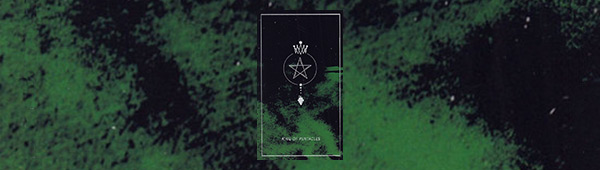
ESTJ (Te-Se-Ni-Fi)
The Machine · King Of Pentacles
business ownership / richness / using possessions for the highest good / community leader / generous / high status / a jolly and friendly person of good nature / good advice / sustained wealth / is happiest in a settled relationship / traditions and family history / honor your roots / tenacity / shrewd practicality / intelligent material command / sees the long view and builds for the future / primary purpose is stability / has created prosperity and comfort in his own life, helps others create it in theirs / when he agrees to help you, success is assured / this may include a substantial gift or loan that brings a long-held dream into reality / can tend towards materialism and ambition or overindulge in the gifts of the world / brings practical solutions and personal power / pushes through barriers to success / business accomplishments / secure in ability to make financial judgments / carefully crafted plans / great self-discipline / can be workaholic / can be corrupt / stolid / dour / sullen
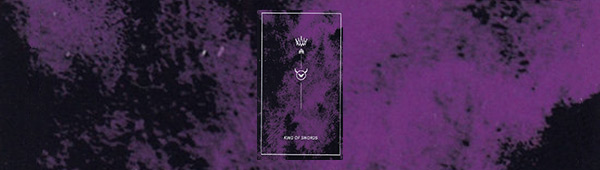
ENTJ (Te-Ne-Si-Fi)
The Warrior · King Of Swords
intellectual authority / logic, reason, legality / detached diplomacy / dry sense of humor / brilliant strategist / master strategy or tactic / plans ahead / in control / in full command / he is the law and authority over whatever field he may choose / cold / harsh / callous / lawyer, judge / cutting through confusion with clear sight / putting plans into action / can be impatient if he has to wait for a consensus before taking action / a fighter, not a lover / the soul of a warrior / loves efficiency and justice / keen mind and strong sense of right and wrong / cannot rest while there is injustice to be vanquished / formidable adversary / his sense of timing allows him to succeed where more impetuous opponents fail / though it may seem as if he is passive in his quiet watchfulness, never underestimate him / has hidden weapons and will strike when the moment is most advantageous / can be bossy and manipulative / heartlessness / abuse of power / power tainted by cruelty and malicious intentions

ESFJ (Fe-Se-Ni-Ti)
The Citizen · King Of Cups
sociable / active compassion / care for others / emotional activity / heated feelings / purity of emotion / spiritual and caring person with great depth / peaceful, loving / affable / graceful / master artist / makes dreams a reality / makes wild, ingenious ideas perfectly palatable for others / can be a source of emotional support, helpful advice, and comforting strength in times of trouble / great compassion and understanding / helpful and kind / addressing strong and unruly emotions with great sensitivity and care / diplomatic and even-headed / knows how to use relationships to get things done / committed to groups and causes that are dear / can fight own natural gifts feeling they are not valid / can struggle to maintain a sense of self, relying heavily on the approval of others / over-sensitive nature that bruises easily / does not suppress his emotions / can be temperamental / selfish, shallow, self-satisfied

ENFJ (Fe-Ne-Si-Ti)
The Leader · King Of Wands
charismatic leader / selfish, outgoing person who must be the center of attention / positive / shining confidence / decisive and confident, with the impressive demeanor of a born leader / warm / toughtful / proud / social commitment / does not hesitate to take action against injustice or oppression / inspires others to stand up for their own rights / thrives under pressure / self-motivation / goal-oriented perspective / big-picture thinker / you can expect his support and strength in times of need, but present a clear plan if you want his help / great vision, able to see incredible possibilities in the worst of circumstances / a quick and masterful man, full of humor, daring, and power / a leader who inspires others to take risks / force of leadership / honor / needs to keep control of anger and impulsiveness / can be unscrupulous and dictatorial / passion can turn to impatience and to anger if he feels he's been let down
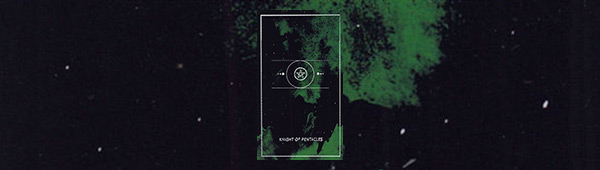
ESTP (Se-Te-Fi-Ni)
The Joker · Knight Of Pentacles
loyal friend / seeking wealth and stability / mind applied to the everyday world / grounded exploration / keenly aware of his surroundings / earthy sensuality / enjoying the physical pleasures of life / builder of new forms / responsible and hardworking, has acquired sufficient skills to be of service / determined / gets the job done / good choice to lead a team effort / heroic person who wants to be of service / vitality / endurance / resilient / rock through thick and thin / devotion to a cause / fights against injustice / works on behalf of the weak and wounded / can be materialistic, boring and plodding / can be complacent / idle / stagnate / careless / socially awkward at times / indifference towards and dismissal of anything he considers impractical or outside his area of interest / someone who has a career orientation and does not care about the feelings of others / might cut corners and take the easy way out
ESFP (Se-Fe-Ti-Ni)
The Prodigal · Knight Of Cups
confident and amiable / feels things deeply / emotional / close ties with family and friends / not opposed to overindulging with drink and drugs / emotional awareness / sympathy / generosity / loveable rogue / racy / salesman / represents all forms of love: romantic, passionate, platonic and familial / obeys commands of the heart / does not let fear, embarrassment or shame keep him from opening his heart / does not hesitate in the pursuit of a righteous cause / sensitive person with high ideals / emotionally courageous / romance or flirtation / charming lover / fickle / prone to flights of fancy / can be prone to moodiness and jealousy / may leave as swiftly as he came / can be wily and lacking in conscience / dabbling in petty crime / holds a grudge and will stop at nothing when it comes to revenge / yearning for union and reunion / desire / courtship / proposal / seeking understanding or hoping for a relationship / seeking spiritual wisdom
ENTP (Ne-Te-Fi-Si)
The Devil · Knight Of Swords
proactive and curious / clear and intentional communicator / quick-witted / loves to show off his cleverness / searching for new ideas / intellectual exploration / interrogates findings / debater / often plays devil's advocate / iconoclast / does not respect authority / carrying an idea forward / assertive / sudden action / brave and skillful warrior / seeking conflict / moves aggressively toward what he wants / rash and ruthless person who lacks empathy / may consider other people as obstacles / there is rarely true peace in his quarrelsome heart / rushes in without adequate planning / hell-bent for leather / may harm others through carelessness and reckless haste / extravagance causes destruction and ruin / often sees the world in black and white, missing all the shades in between / little application and even less ethical consideration in endeavors / might believe that knowledge and information are neutral forces
ENFP (Ne-Fe-Ti-Si)
The Believer · Knight Of Wands
firecracker personality / seizing the day / inspires those around him / enlightener / excellent at networking / searching for fame and renown / thrill-seeker / willingness to try anything / adaptable / versatile / jack-of-all-trades / romance, gallantry / seeking sexual stimulation / both charming and annoying, depending on the situation / can have little consideration for others / putting everything on a limb for what he believes in / may rush in where angels fear to tread / intuitive action / fortune seems to follow him and keep him from true harm / will champion any righteous cause and pursue any path that promises adventure / belief in the unknown / seeks adventure and excitement / hard to pin down / hyper / daring / rarely thinks before acting / extremely passionate, can be distracted / restless / lives for glory, risks, and righteous challenges / something new / creative expression / activist and world changer
ISTJ (Ti-Si-Ne-Fe)
The Skeptic · Queen Of Pentacles
highly intelligent / inclined to order and efficiency / practical and evenhanded provider / adept at maintaining and distributing resources / disciplined / calm, serene and grounded / usually dignified / knows how to use time / cautious with resources / somewhat conservative / businesslike acumen / great capacity for work / dependable / fair-minded / health considerations and diet / flavors / caring for the environment / a resource for wealth / nurturing others / providing for those who are in need / clear understanding of the world and how it works and how she works within it / offers her advice freely and it is always worth taking / can find solutions to problems that may seem insurmountable to others / more than capable of caring for an entire network of people / might struggle with tension between work and personal life / can be vulgar and bawdy / can be overly ambitious from time to time / suspicious, condescending, conniving
INTJ (Ti-Ni-Se-Fe)
The Investor · Queen Of Swords
brilliant / clear-headed and smart / intellectual self-reliance / very clever and perceptive / astute / can quickly assess all aspects of a situation to get to the truth, including the underlying psychological motivation for others' attitudes and actions / intellectually rigorous / adept at numbers / great planner and problem-solver / can have a sharp tongue / prefers matters of the mind to those of the heart / shields her emotions well / cold-hearted / keeps her distance and does not easily welcome intimacy / those who are worthy of her company must respect her independence and intelligence / sees all sides of a situation clearly, which allows her to manipulate it to her advantage / wields quiet power behind the scenes / may be more dangerous than is easily perceived / able to forge her way in the world / malice / deceit / intolerance / no patience for ignorance / does not suffer fools gladly / might struggle with tension between relationships and impartiality

ISFJ (Fi-Si-Ne-Te)
The Angel · Queen Of Cups
protective / understanding / brings grace and sensuality to everything she touches / smoothes over rough situations with her gentle kindness / makes decisions based upon heart rather than head / compassion, emotional stability, fair judgment / thoughtful / concerned for the welfare of others / soothing / virtuous healer / may be attracted to nursing, art, writing or social work / empathetic / warm and loving / great emotional depth / finding avenues for self-expression / music, poetry, dance / hesitation to trust / although she may retreat into her dreamy world of imagination, she is a deeply committed mate once her heart is won / dreamy person who lives a life of poetry and beauty / the beloved one / motivated by love / unconditional love / mystery / fascinates / quiet, introverted, creative / directing the imagination into valuable activity / sometimes moody and overly needy / can become self-involved / self-satisfied, vain
INFJ (Fi-Ni-Se-Te)
The Narrator · Queen Of Wands
honorable, loving, loyal, spiritually inclined / private / lets few in / introspective / in touch with her intuition / counselor / guide / advisor / mystic / combines intuition with practicality to spark a creative blaze that warms all who know her / dedicated / brings passion to any undertaking and inspires others to strive for excellence / has considerable magnetism / attracts others through beauty and charisma / charming and bewitching woman who draws followers and friends like a candle draws moths / seductive / desired by many / creative muse / light shining from within / nurturing desires and passions / intense and passionate / understands her own power and isn't afraid to use it to get what she wants / can be over-confident, frivolous or arrogant / great friend but dangerous enemy / high achiever / can take a long time to course-correct / might use influence for petty reasons / deceit, infidelity, opposition
ISTP (Si-Ti-Fe-Ne)
The Rebel · Page Of Pentacles
good with their hands, especially when it comes to building things and pulling them apart / learns through experience / skills / abilities / coordinated / good instincts / frugality / thriftiness / offers assistance in practical tasks and undertakings / inwardly composed / quiet / industrious / willing to work hard / patience / loyalty and trustworthiness but also sometimes rebelliousness / grounded in the teachings of nature / nature-loving / fertility in the everyday world / fruitful foundations / physical innocence / dedicated worker / meticulousness / attention to detail / careful, practical, consistent / won't be rushed / can accomplish great things by taking one small step at a time / can find it hard to feel ambitious or dream big / can become stodgy and averse to change, preferring to commit to their path and stay its course / may end up feeling trapped in a cage of their own making and not sure how to free themselves / can be greedy or lazy
ISFP (Si-Fi-Te-Ne)
The Peacemaker · Page Of Cups
gentle / has a tender heart / good friend / great helper / little experience in the real world of relationships / light-hearted / permeable / prefers to keep things at a superficial or casual level while he is learning how to trust / implike pranks / immaturity / naivety / developing emotional understanding of self and others / innocent, dreamy nature / daydreamer / imagination and dream-like state / boundary between imagination and reality / liminal space / organic rhythms / comfort / acceptance / emotional innocence / can be emotionally vulnerable and over-sensitive / curious, keeps an open mind / childlike excitement / sense of optimism / wonderment / fun / playfulness / inner vision / artistry / style / creative margins / open to honest and heartfelt communication / can lack self-love or self-confidence / can be retiring and shy / can willfully ignore common sense or rational arguments / failure to seize opportunity
INTP (Ni-Ti-Fe-Se)
The Alien · Page Of Swords
smart, witty / loves learning / inquisitive / probing / investigation / spionage / awareness / examination / concise, precise and logical / mental innocence / inquiring mind, always seeking to know more / battles the forces of illusion and strives for clarity of mind / needs positive outlets for curiosity / intellectually dexterous mind / mental agility / useful information / enigmas and puzzles / ciphers / mind games / ability to hold a tremendous amount of trivia / might claim to know much without trustworthy sources / suspicion / connecting patterns / strong sense of justice / vision and courage / enjoys analysis / reads between the lines / intellectual pursuit / rebellious thought / free thinker / freedom from pre-conception or unquestioned ideas / freedom from orthodoxy / attuned to detecting threats and inconsistencies / can turn challenges into opportunities / emotional entanglements may feel like a distraction from his ambitions
INFP (Ni-Fi-Te-Se)
The Spirit · Page Of Wands
free spirit / spiritual seeker / innocent / very sensitive / spiritual innocence / purity of awareness unaffected by experience and held without a filter / attentive / highly intuitive / discovery / insight / says know yourself / speaking the truth / sincere / bearing information or spiritual importance / learning about magic and energy / experience life just for itself, free of external pressures / endless curiosity / untapped potential / a creative soul / thinks outside the box / collaborates with the invisible / has creative potential but has not quite decided yet where to put his energy / needs an outlet for his energies / spark of inspiration / has just had a brilliant idea and is wondering how to set about it / starting a project or just setting out for a goal / inclined to bursts of enthusiasm rather than a sustained effort toward a goal / feelings can turn quickly if things don't go his way / scattered / can get bored easily / capricious


Types #17X ← ✸